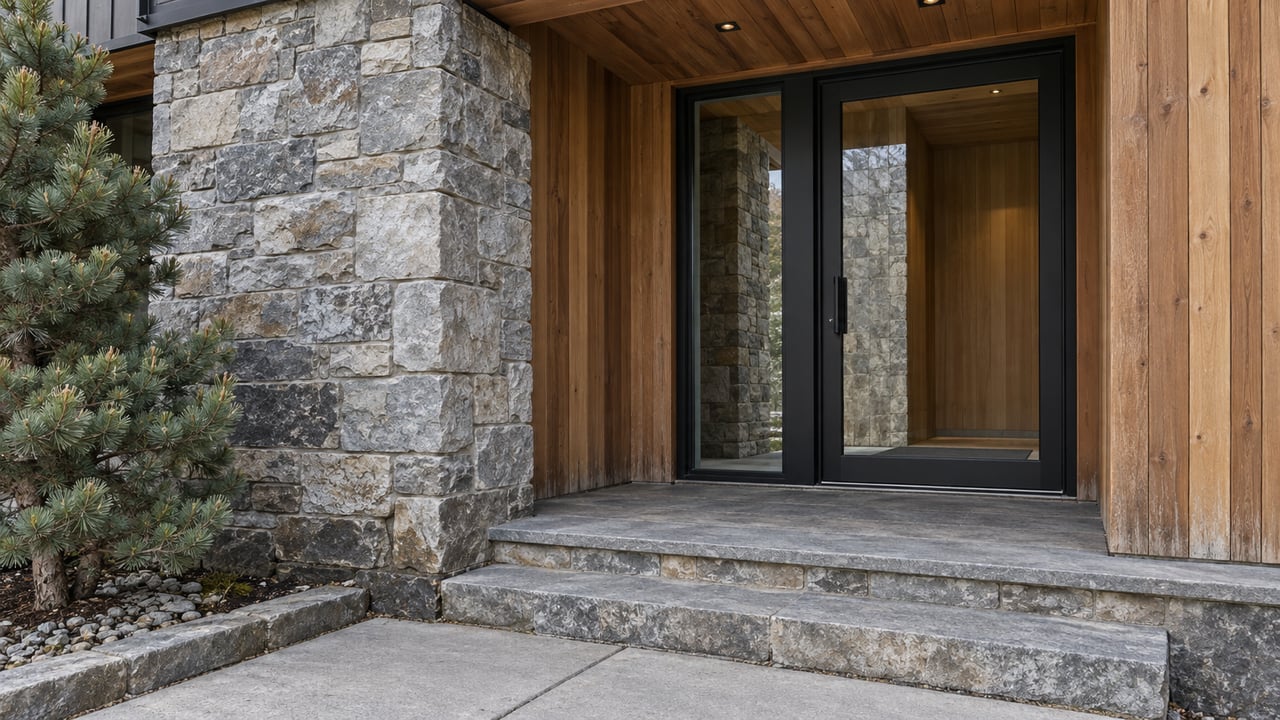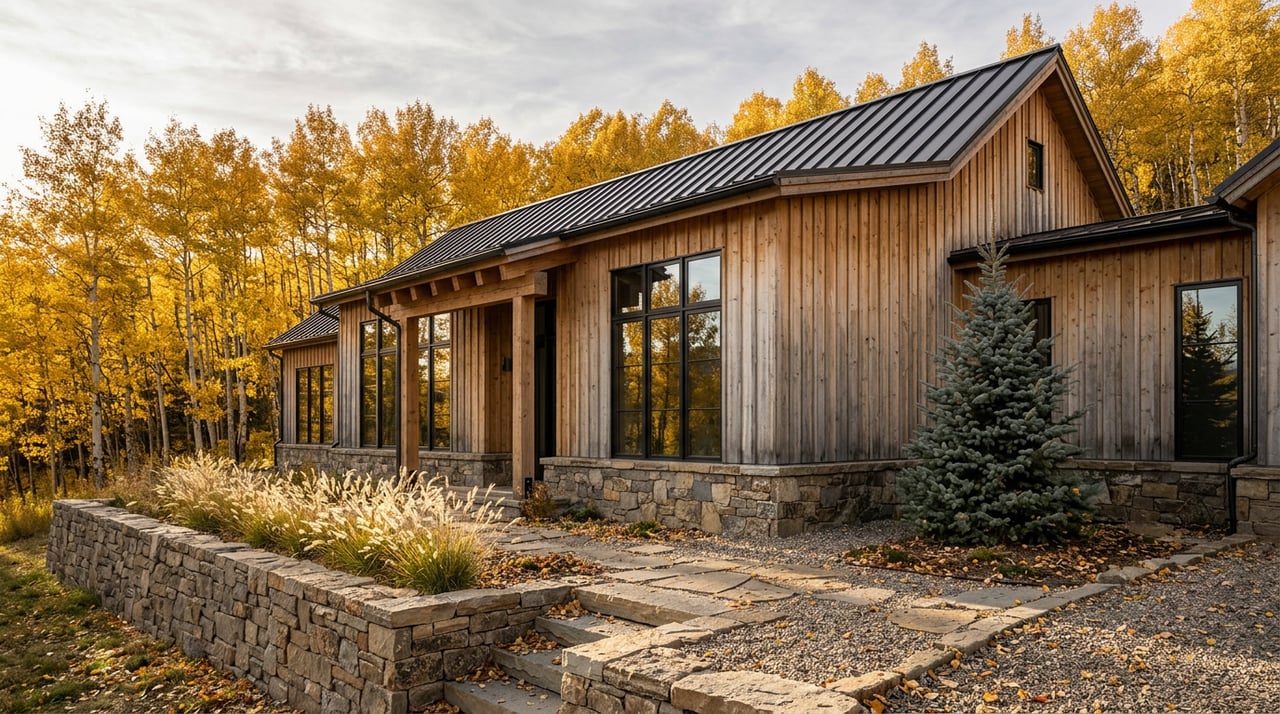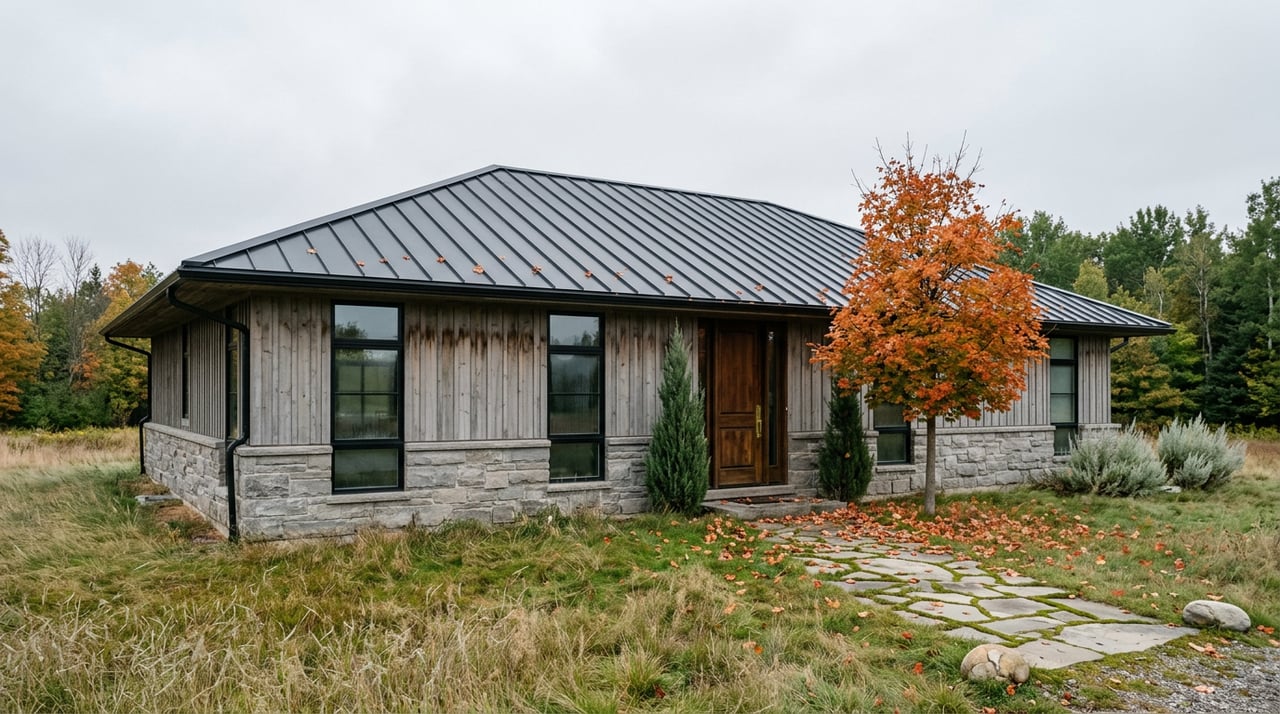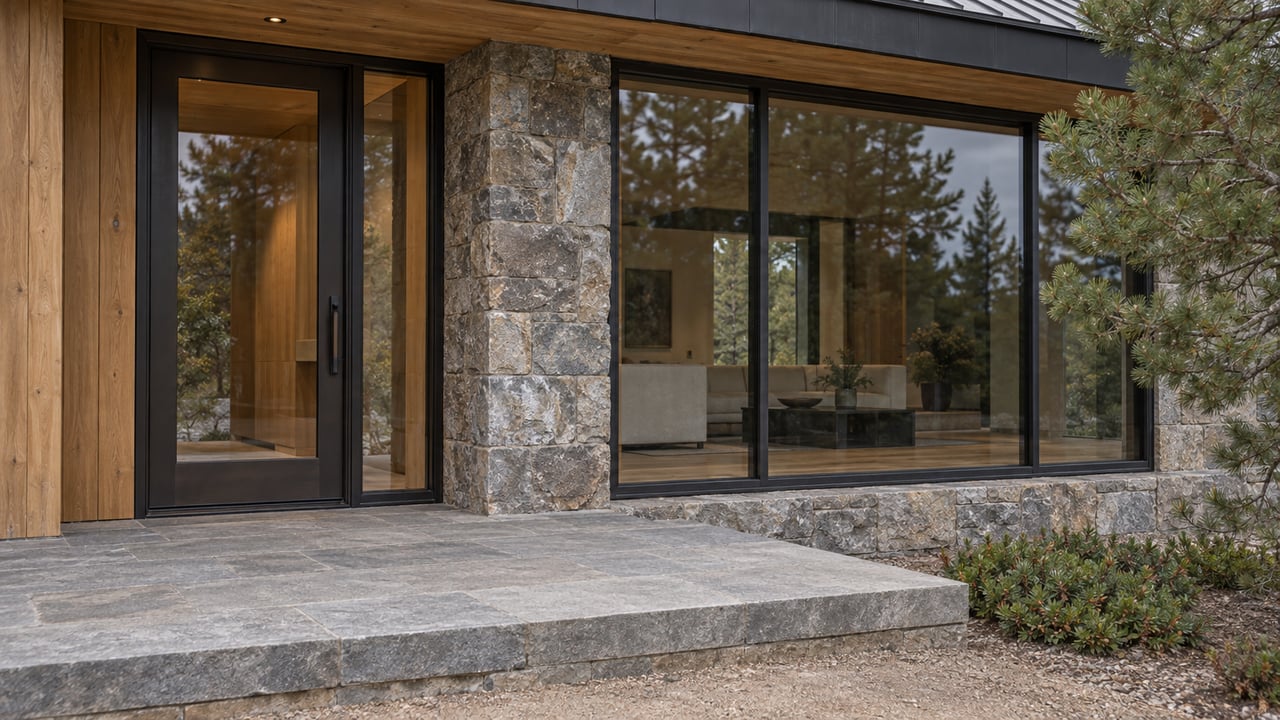
"It's not in the town of Telluride. Nor is it directly on a ski run."
That is how the listing broker explained, back in 2022, why a widely admired estate on a 35 acre parcel in Gray Head had already spent six years looking for a buyer. The house in question, known as Sunset Ridge at 296 Gray Head Lane, is not a hard sell on paper. It was designed by Poss Architecture to frame Wilson Peak from nearly every room, sits on its own aspen grove backing straight onto national forest, and comes with the kind of finish level that Telluride's ultra luxury segment expects. And yet its price history reads less like a normal sale and more like a slow motion negotiation with itself.
- 2016: listed at $32.5 million
- Still unsold years later: asking price cut to $22.9 million
- August 2023: finally sold, for $14.5 million
- Sometime after that: relisted at $24 million, then pulled back off market again
That is not a house that got cheaper because the market cooled. It is a house that never had a clean price to begin with, because the neighborhood around it does not generate enough transactions to build one.
Why There's No Comp for This House
Gray Head is a private preserve of 885 acres carved out of the old Aldasoro Ranch, sitting at the base of the Mt. Sneffels Wilderness about eight miles from downtown Telluride. It was developed into exactly 24 lots of 35 acres each, and listing after listing across different brokerages describes it the same way: a conservation style development that has been permanently capped at that number. There is no phase two. No lot ever gets split, and no new lot ever gets added.
Compare that to Aldasoro Ranch next door, the much larger subdivision Gray Head was originally part of. Aldasoro spans roughly 1,515 acres and was platted into 160 homesites ranging from 1 to 15 acres, a scale that produces a steady trickle of sales every year and, with it, a real price curve that appraisers and brokers can point to. Gray Head produces almost none of that. With only 24 lots that will ever exist, and with most owners holding for decades rather than flipping, any given year might see one sale, or none. Every transaction becomes its own negotiation, argued from scratch, because there is rarely a truly comparable sale from the past twelve months to anchor it.
That is the mechanism behind Sunset Ridge's eight year odyssey. A $32.5 million opening ask in 2016 was not obviously wrong at the time, because there was so little in the neighborhood to check it against. By the time it sold in 2023, the market had simply run its own experiment and landed on $14.5 million, a number that only existed because the property finally found the one buyer willing to test it.
What Thin Trading Looks Like Right Now
The same pattern is visible in this year's activity. In January 2026, a vacant 35 acre parcel in the preserve, Lot 11C, came on the market as raw land at $3.1 million. No house, no infrastructure beyond what the preserve provides collectively, just the acreage and the view corridor. A few months later, in early June 2026, a different 35 acre Gray Head estate, this one with a finished home on it, went under contract at $10.495 million.
Same acreage. Same preserve. A spread of more than $7 million between them. In a conventional subdivision with dozens of annual sales, that gap would be explained by square footage, finish level, or age of construction, and a buyer could check the math against a dozen recent closings. In Gray Head, the gap is explained mostly by the fact that a house exists on one and not the other, because there is no deep pool of recent sales to separate the value of the dirt from the value of what got built on it.
A Few Years Back, Land Told the Same Story
A local brokerage that tracks lot by lot activity across these mesa neighborhoods once compiled average land pricing across several years of closed sales. At the time, Gray Head's average in market land price sat around $2.55 million, based on a small handful of transactions. Aldasoro's average land price, drawn from a much larger sample of solds, was closer to $712,000.
That snapshot is a few years old now and should be read as a directional signal rather than a current price, but the direction has been consistent for a long time and nothing in this year's activity contradicts it. Gray Head land trades at a steep premium per lot, not because the acreage itself is dramatically better than what's available nearby, but because there is so much less of it available to trade at all. Aldasoro's 160 lots and decades of turnover give buyers and sellers a real market to negotiate against. Gray Head's 24 lots give them almost nothing.
What You're Actually Buying Into
The two neighborhoods also describe their own governance differently, and the difference tells you something about what kind of ownership each one is selling. Aldasoro's prospective owner materials spell out utility infrastructure in detail, listing Aldasoro water, Town of Telluride sewer, San Miguel Power electric, Black Hills gas, Bruin trash, and CenturyLink or Spectrum internet. It reads like a conventional subdivision because it is one.
Gray Head's public materials focus instead on caretaker managed common elements: road and trail maintenance, snow removal, oversight of the shared historic homeowners cabin, and reservations for the tennis court and fly fishing pond. That is not a lesser system, it is a different one, built around the idea that owners are buying into a shared preserve rather than a neighborhood of individually serviced lots. It is a meaningful distinction for anyone comparing the two, because it shapes what gets negotiated at closing and what gets assumed as a given.
The Practical Math for Buyers and Sellers
For a seller, the Sunset Ridge timeline is a caution against anchoring to an aspirational number in a market with no comps to defend it. A high opening ask in a thin neighborhood does not just risk a slow sale, it risks years of public price cuts that become part of the listing's own history. Pricing realistically at the outset matters more in Gray Head than almost anywhere else in the Telluride area, precisely because there is no active comp set to lean on if the number turns out to be wrong.
For a buyer, the same thinness cuts the other way. Patience, and a willingness to negotiate hard against a legacy asking price, can produce real gaps between list and sale, the way $14.5 million eventually cleared a home that had once been priced at more than double that. Financing conversations also tend to take longer here, since an appraiser working a 24 lot preserve may need to look outside the immediate neighborhood to support a value, and that search takes time a tighter market wouldn't require.
None of this makes Gray Head a bad place to buy or sell. It makes it a specific kind of market, one where the price of anything is set less by a curve of recent sales and more by whoever happens to be negotiating this particular year.
If you're weighing a purchase or sale in Gray Head, or trying to make sense of how a fixed 24 lot preserve prices against a larger neighborhood like Aldasoro, Hilbert Homes can walk through the specific comps, or the lack of them, before you write an offer or set an ask.
FAQ
Will Gray Head ever add more than 24 lots? No. Every source describing the preserve, from brokerage listings to the homeowners association itself, treats the 24 lot count as permanent, tied to the development's conservation style designation on the original 885 acres.
Does the small lot count make financing harder? It can extend the timeline. With so few recent sales inside the preserve itself, appraisers sometimes need to draw on comparable large acreage properties outside Gray Head to support a value, which takes longer than pulling three recent closings from the same street.