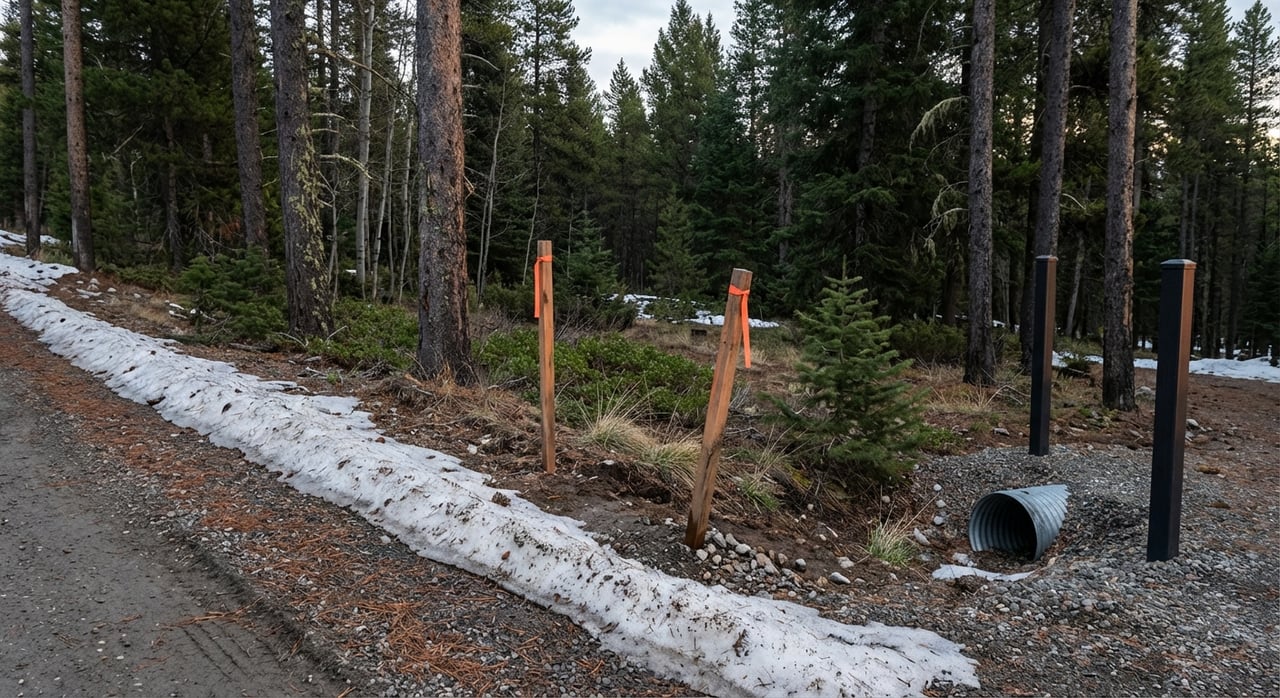
If you love the idea of a larger, wooded lot minutes from the lifts and trails, Ski Ranches might be your match. Yet two homesites on the same street can live very differently once you factor in sun, slope, access, utilities, and reviews. This guide gives you a clear plan to compare lots and avoid surprises before you buy. You will learn what to look for, which approvals to expect, and the key questions to ask. Let’s dive in.
What makes Ski Ranches unique
Ski Ranches is a long-established single-family subdivision just south of Mountain Village, set against National Forest with a network of neighborhood trails. Lots commonly range from about 1 to 3 acres, with mature trees and natural privacy. The subdivision includes roughly 190 to 200 parcels, most of which are built out. Many buyers view Ski Ranches as a wooded alternative to the denser resort core.
To ground your search in facts, start with the neighborhood’s official resources. You can find CC&Rs, maps, Design Review guidelines, wildfire planning, and transfer documents on the Ski Ranches HOA site. Review the governing documents on the HOA documents page early.
Orientation and views: read the land
A lot’s aspect and vegetation shape daily light, winter comfort, and long-term value.
- Sun and aspect. South-facing sites typically enjoy better winter solar gain and less driveway icing. North-facing and shaded benches may need more snow management. Ask for a simple sun and aspect sketch from a surveyor or architect to understand seasonal light.
- Trees and topography. Mature trees add privacy, but they also affect views and design options. Benches or breaks in slope can offer natural building pads with lower visual impact.
The Ski Ranches Design Review Guidelines encourage siting that respects topography and existing wooded areas. Before you fall in love with a view, request contour maps and seasonal photos that show potential view corridors from realistic building heights. Review the siting expectations in the DRPC Guidelines.
Privacy and the Design Review process
Ski Ranches uses an active Design Review and Property Committee (DRPC). The process applies to exterior projects such as new homes, decks, driveways, and tree removal. The DRPC defines “Proximate Neighbors” who must be notified for many applications and seeks to minimize visual impact from public ways and nearby homes.
Why it matters: privacy, views, and site clearing choices are not only personal. They are part of an enforceable review. Request the full application checklist and recent meeting minutes to understand precedent and timelines. Start with the DRPC Guidelines and the HOA’s documents hub.
Access and winter reliability
In the mountains, access is convenience and cost rolled into one. Your build, daily life, and winter budget depend on it.
County vs. private roads
Confirm whether your frontage road is county maintained or privately maintained. San Miguel County is not responsible for private roads. Maintenance responsibility influences snow removal, long-term costs, and liability. Read the county’s development and access FAQs to understand responsibilities and permit triggers in the San Miguel County FAQ.
Driveway design and grade
Driveways in steep settings can require engineered design. The county may require cross-sections, grade profiles, and a professional engineer’s stamp once certain thresholds are met. Longer or steeper drives often add cost for construction and winter plowing. Ask early about any shared-drive agreements or private easements.
Snow removal realities
Long or shaded driveways tend to need more plowing and sanding. Some owners choose heated aprons or snowmelt systems near garages. Ask the seller who performs snow removal today, whether HOA dues cover any private road plowing, and what typical seasonal costs look like.
Utilities and septic basics
Water: Mountain Village service
The Town of Mountain Village provides water service to Ski Ranches as a water-only service. Expect a tap application and event-based tap fee. Confirm whether a specific lot already has a paid or installed tap, or if fees remain due. See tap procedures and service details on the Mountain Village utilities page.
Sanitation: on-site wastewater (septic)
Most Ski Ranches properties rely on on-site wastewater treatment systems. San Miguel County requires a Development Permit and OWTS permits. A soil evaluation by a CPOW-certified technician and engineered OWTS plans stamped by a Colorado Professional Engineer are standard parts of approval. Septic feasibility is a make-or-break item, so order this work early. Review requirements on the county’s OWTS program page.
Wells and backup plans
If a specific parcel lacks a municipal hook-up, drilling a well requires a state permit and water-rights review. Verify viability with county planning and the State before assuming a well is possible.
Electricity and communications
Electricity is provided by the regional cooperative that serves San Miguel County. Internet and fiber coverage can vary by parcel. Ask utility providers about service type and location at the lot line. Consider backup power solutions for winter outages if that aligns with your lifestyle.
Wildfire, forest health, and insurance
Ski Ranches is a wooded community within a wildland-urban interface. The HOA has adopted a Wildfire Mitigation Plan with guidance on defensible space and chipping programs. Read the Ski Ranches Wildfire Mitigation Plan and ask the HOA for the latest chipping schedule.
The West Region Wildfire Council provides free site visits and cost-share programs, and the HOA encourages owners to schedule a visit. Consider booking a pre-close consultation through the HOA’s resource page for WRWC site visits.
Insurers often scrutinize homes in forested settings. Your mitigation efforts, materials, and defensible space can affect insurability and premiums. Get a pre-purchase insurance check with a broker who understands Colorado WUI underwriting. Use the HOA’s mitigation plan as a starting point for questions.
Slope, geotechnical, and drainage
On steeper or bench-type sites, expect the county to require geotechnical, drainage, and erosion-control plans as part of development permits. If a lot shows geologic or drainage concerns in county records, mitigation may raise costs and timelines. Your civil engineer can help plan grading, driveway profiles, and revegetation that meet county standards.
If you plan to access backcountry terrain from the neighborhood or are evaluating lots near steep forested slopes, consult the Colorado Avalanche Information Center for regional forecasts and context. Explore regional updates via the CAIC news page.
The two-track approval path
You will navigate two reviews in parallel:
- HOA DRPC design review. Site aesthetics, tree removal, construction staging, and neighbor notice are handled here. Approvals are subject to applicable building codes.
- San Miguel County development permit. Planning, OWTS, driveway access, building permits, and inspections run through the county.
Aligning both tracks early avoids redesigns. Start with the DRPC Guidelines and the HOA’s documents page for submittal needs. For timing and fee classes, the HOA also publishes a process overview on the DRC page.
Budget and timeline expectations
- DRPC classes and fees. The HOA publishes application classes, review fees, and construction monitoring fees tied to duration. Multi-step DRPC reviews can take a month or more once a complete package is submitted.
- County permitting. The county reviews development permits through a portal that coordinates Planning, OWTS, and Road and Bridge. Your design team should map expected review durations and sequence submittals so site, septic, and driveway engineering arrive together.
- Construction realities. In wooded, sloped terrain, budgets often shift around driveway work, septic design, tree management, and drainage. Build in contingency for mitigation and weather windows.
A buyer’s due-diligence checklist
Use this list to compare homesites with confidence:
- Read the rules. Obtain and review the CC&Rs and Design Review Guidelines, including neighbor-notice requirements and any tree removal or materials restrictions. Start at the HOA documents page.
- Confirm water. Ask whether the lot has a paid Mountain Village water tap. If not, review tap procedures and fees on the Mountain Village utilities page.
- Verify septic feasibility. Order a CPOW soil evaluation and an engineered OWTS concept if no permitted system exists. See county steps on the OWTS program page.
- Clarify access and plowing. Determine if the access road is county or private, who pays for snow removal, and whether drives meet county design thresholds. Read the San Miguel County FAQ on driveway and permit triggers.
- Map sun and views. Request a topographic survey, seasonal photos, and a sun-aspect sketch to understand view corridors and winter light.
- Plan wildfire mitigation. Schedule a WRWC site visit, and read the HOA’s Wildfire Mitigation Plan. Confirm whether tree work requires DRPC approval.
- Check geotechnical needs. If slopes or drainage look complex, order a geotechnical report and preliminary grading and erosion plans.
- Understand transfer costs. Confirm any real estate transfer assessment or exemption status with the HOA and title. Refer to forms on the HOA documents page.
- Pull HOA records. Ask for recent DRPC minutes, any open violations, and the HOA budget to anticipate future assessments.
Ready to compare specific parcels or translate these steps into a buildable plan that fits your lifestyle? Reach out for a local consultation. You bring the vision. We will help you align it with the land and the approvals.
If you want one-on-one guidance on Ski Ranches lots, contact Hilbert Homes for a neighborhood walkthrough and a clear due-diligence roadmap.
FAQs
What is Telluride Ski Ranches and where is it located?
- Ski Ranches is a long-established single-family subdivision just south of Mountain Village, adjacent to National Forest with wooded lots and neighborhood trails.
How does the Ski Ranches HOA design review affect my build?
- The DRPC reviews exterior projects, requires proximate neighbor notice in many cases, and encourages low visual impact and tree retention, so siting and materials must align with the DRPC Guidelines.
Does Ski Ranches have municipal water and sewer service?
- Mountain Village provides water service to Ski Ranches, while most properties use on-site wastewater systems; confirm tap status with the seller and tap procedures on the Mountain Village utilities page.
Who handles road and driveway maintenance in Ski Ranches winters?
- County-maintained roads are handled by San Miguel County, but private roads and driveways are owner or HOA responsibilities; verify maintenance and plowing arrangements and see the San Miguel County FAQ for access standards.
What wildfire steps should I plan for as a Ski Ranches buyer?
- Read the Wildfire Mitigation Plan and schedule a free West Region Wildfire Council site visit through the HOA’s resource page to plan defensible space and home-hardening.
What is the real estate transfer assessment (RETA) in Ski Ranches?
- Some transactions involve a transfer assessment; confirm applicability and any exemption status with the HOA and your title company, and review forms on the HOA documents page.
Are there avalanche or geologic hazards I should consider in Ski Ranches?
- For lots near steep terrain or for backcountry access, monitor regional context on the Colorado Avalanche Information Center and obtain geotechnical and drainage plans if slopes or soils warrant county review.